Dan Rifkin–Ben Rifkin relationship
Defending JacobDan Rifkin’s bond with his son Ben is presented through the anguish of a father trying to make sense of a death that has destroyed the family life he knew. Dan’s memories of Ben as a good, untroublesome fourteen-year-old stand against the unanswered question of why anyone would kill him; the search for a legal resolution offers hope of closure, but cannot restore the relationship or end its effects on the living.
A father’s questions
Dan recalls Ben not simply as a child who was killed, but as a particular boy: good, only fourteen, and, in his father’s emphatic account, never a source of trouble. The insistence on Ben’s goodness is not an argument that other children deserve less protection. Rather, it sharpens Dan’s inability to find any ordinary explanation for the murder. Anger, greed, and jealousy are familiar human motives, he says, yet they cannot account for rage directed at Ben or any child.
His question moves beyond the identity of the killer or the details of the evidence. Dan wants to know what separates people who experience ordinary anger or jealousy from those who can kill. He presents himself as rational and asks for an explanation, but the repetition of the question shows the limits of reason when it confronts an irreversible loss. The relationship remains active as a demand for understanding: Ben’s character is recalled, while the motive for his death stays beyond Dan’s grasp.
Grief and the absent son
At Cold Spring Park, Dan’s grief is rendered through distance and scale. He appears alone in the broad, empty grassy space, moving toward Andrew Barber with his head bowed and hands thrust into his coat pockets. The image makes the isolation of bereavement visible without making it a private matter only: Dan is approaching the man responsible for resolving the case, and his mourning is already entangled with the investigation.
When Dan returns to the place where Ben died, the scene becomes inseparable from his sense of fatherly failure. He imagines the interval in which Ben was alive among the leaves and remembers that he was elsewhere, unaware and unable to help. His account moves through the ordinary landmarks of parenthood—Ben’s birth, first steps, learning to ride a bike, and first day of school—before arriving at the one moment when Dan believes he should have been present but was not. The contrast explains why the location carries such force for him: it joins the full history of their relationship to the fact that its final crisis happened without his knowledge.
Dan tells Andrew that he cannot return to his family because, in the emotional terms of his grief, his family is dead. He also says that what happens to him from then on no longer matters. These statements express the scale of his despair, not a recovery or a resolution; the loss has unsettled his attachment to the future as well as his memory of the past.
Hope for closure and its limits
Dan asks what bereaved parents do to endure and whether there is a pattern that helps some of them make it through. Andrew recommends relying on family and other people, including survivor groups and a victim advocate. Dan then asks about parents who never recover, making clear that he fears his own grief may not ease. Andrew reassures him that they will not let that happen and invokes Ben’s presumed wish that his father should carry on. The exchange makes Ben’s influence present in the conversation even though he cannot answer for himself.
Dan repeatedly links his ability to go on with the case being resolved. He believes that knowing the killer has been identified and put away will help him, his wife, and the family; he tells Andrew that he has faith in him, while insisting that his appeal is not meant as pressure. Closure is imagined as both a legal outcome and a form of relief for the people Ben left behind. The novel keeps those meanings distinct: the case may reach a procedural conclusion, but a verdict or dismissal cannot undo the death or guarantee recovery.
The Rifkins and the Barbers
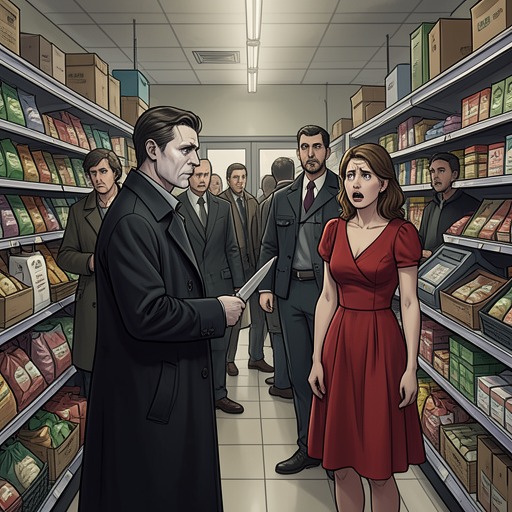
The connection between the two families becomes painfully visible when Dan and his wife Joan encounter Andrew and Jacob Barber at a market. The families are unevenly matched in their experience of loss: three Barbers face two Rifkins, and Jacob’s continued presence stands against Ben’s absence. The encounter requires no explicit accusation to make that contrast legible. For the Rifkins, the ordinary fact that another family’s son is alive has become difficult to bear.
Later, Dan’s confrontation with Andrew at Cold Spring Park exposes the collapse of trust between them. Dan accuses Andrew of lying and tells him to leave, treating the case not only as an investigation but as the remaining path to accountability and relief. Their relationship is therefore bound to Ben’s: Andrew’s professional responsibility to resolve the case has become, in Dan’s eyes, a personal promise on which the bereaved family’s future depends.
When the charges against Jacob are dismissed after Leonard Patz’s confession, the Barbers experience the decision as vindication, even as they hesitate to celebrate until the dismissal is official. The Rifkins’ grief is not answered by that outcome. Soon afterward, Dan approaches the Barbers with a kitchen knife, but James O’Leary intervenes before Dan reaches them and disarms him. This act of attempted violence marks the catastrophic distance between legal resolution and emotional repair: the dismissal changes Jacob’s legal position, but does not settle what Ben’s death has done to his father.
An enduring bond
The book’s later reflection on life after exoneration distinguishes momentous days from the many ordinary days that follow them. That distinction matters to Dan and Ben’s relationship because no single event—the conclusion of an investigation, the release of a defendant, or the passage of time—can stand in for the lost life. Ben remains present in Dan’s recollection of his childhood, in his questions about why people kill, and in his belief that a father should have been there when his son needed him.
Dan’s story resists a neat equation between closure and healing. The legal case can be dropped, but the father’s attachment to the dead boy persists, now caught between loving memory, unanswered questions, and the damage grief brings into contact with other families. Ben’s absence is not merely a fact in the case; it is the continuing condition through which Dan understands fatherhood, justice, and what remains possible for him after the loss.